Breaking the Doll Spell: From Object to Author

If you treat me like a toy, don’t cry when I play with you
A gun is pressed to a woman’s head.
The barrel rests against her temple. A finger curls around the trigger. She does not flinch. She does not speak. She does not raise her hands. Around her, a room of people watches—some curious, some thrilled, some uneasy, some intent on seeing what will happen if no one intervenes. The safety is off. The bullet is real. The woman stands perfectly still.
This was not a crime scene.
This wasn’t an excerpt from the Epstein files.
This was an art gallery.
Permission Is a Loaded Weapon
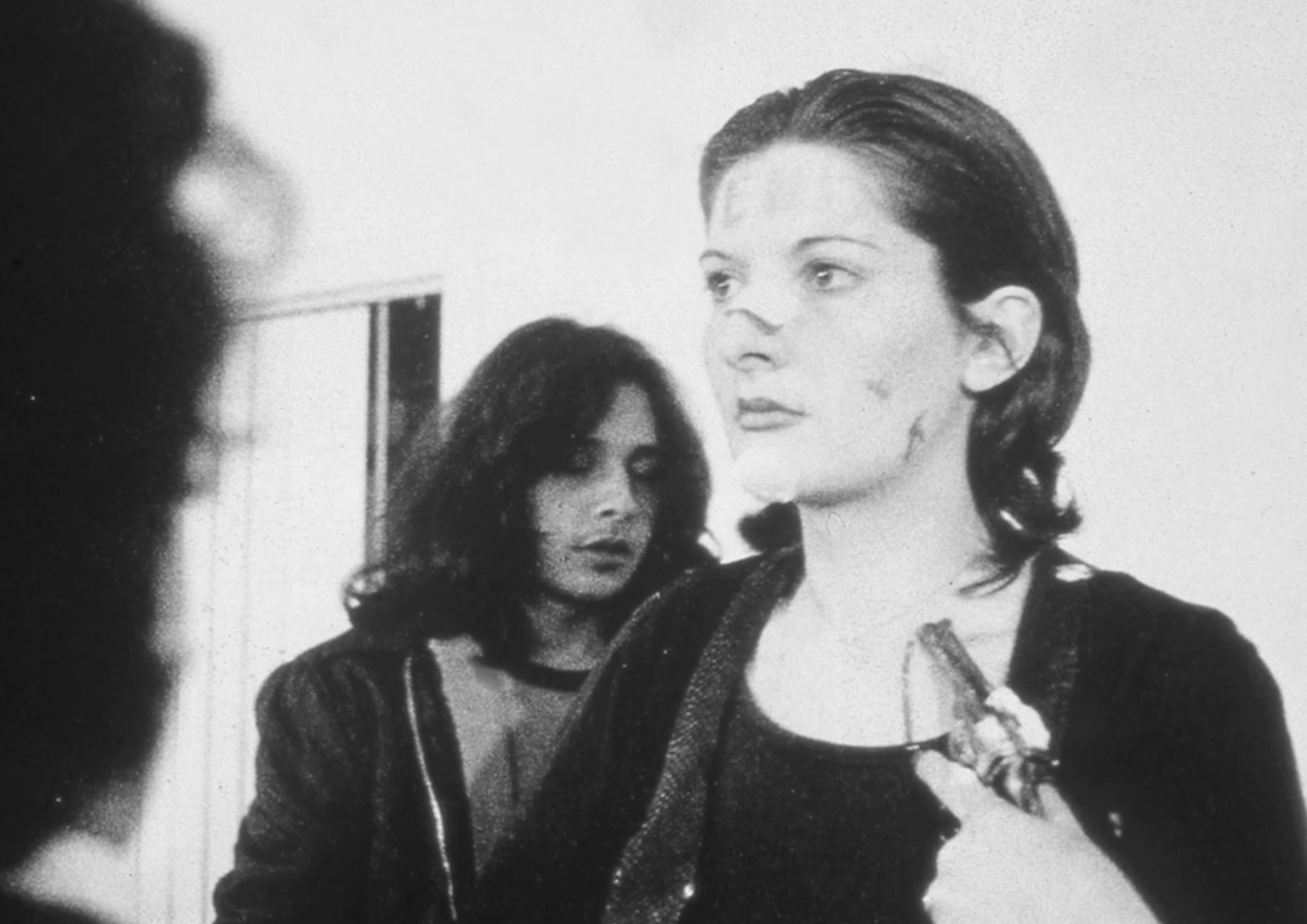
In 1974, in Naples, Marina Abramović stood silently for six hours during a work later titled Rhythm 0. On a table beside her were seventy-two objects offered to the public: a rose, scissors, a scalpel, a whip, a metal bar, a gun, a single bullet. Her instruction was simple: I am the object. Anyone could do to her whatever they wished. She would take full responsibility.
The violence escalated quickly. Clothes were cut away. Skin was broken. Blood appeared. Someone loaded the gun and aimed it at her head. Others finally intervened—not because the rules were broken, but because the experiment had become uncomfortably honest. When the six hours ended and Abramović moved—when she reclaimed agency—the room emptied. People ran. Accountability, it turns out, kills the mood.
Rhythm 0 wasn’t a stunt. It was a statement on objectification—on what happens when a woman is declared a thing, agency removed, consequences suspended. Abramović later said, “If you leave it up to the audience, they can kill you.”
From Object to Author
I spent years inside a high-control religious cult that sanctified female submission not as a bedroom preference but as a metaphysical law. Obedience was holiness. Self-erasure was virtue. Desire was suspect. Authority lived elsewhere—male, distant, unquestionable. Women were trained to be pleasing, deferential, useful. Our worth arrived from the outside like a performance review we were never allowed to read.
Leaving that system required more than escape. It required deprogramming objecthood—which, spoiler, takes longer than the exit interview.
It’s a subject—pun intended—I teach in my female domination workshops at my Boudoir Soirée, where women practice moving from spectacle to sovereign. But it’s also my life’s work. Long before it was a curriculum, it was survival.
My book Domme & Dommer takes a comedic run at this truth: kink as cult recovery. Laughter as deprogramming. Power play as practice. Sometimes the fastest way out of a belief system is to laugh at it—while holding the whip.

Feather-Light, Frame-Ready
Not only were women taught to be objects—we were taught to be feather-light ones. Delicate. Decorative. Portable. Beautiful pieces of art to be arranged around a room, not forces meant to alter its architecture. We were trained to take up space aesthetically, not materially. To be admired, not encountered. To be placed, not to place ourselves.
In short: be a lamp, not a load-bearing wall.
Objectification is not a metaphor. It’s a political, economic, spiritual, and erotic condition. To objectify a woman is to reduce a living subject into a thing that exists for use.
The Male Gaze, According to the Script
Once a human is categorized as an object, empathy collapses. Objects do not consent. Objects do not resist. Objects do not require moral consideration. Ownership follows reduction; violence follows ownership. Patriarchy didn’t merely mistreat women—it redefined us.
The male gaze perfected the training. It fragments women into parts—legs, lips, nipples, youth—rather than encountering us as whole beings. Women learn to watch ourselves being watched. We self-monitor. We perform. The body becomes a project; time becomes the enemy.
Margaret Atwood names this internal surveillance with surgical precision:
“Even pretending you aren’t catering to male fantasies is a male fantasy… You are a woman with a man inside watching a woman. You are your own voyeur.”
That’s the trick. The watcher doesn’t need to be in the room anymore. He’s already been installed. The gaze becomes internal. Women don’t just perform femininity—we police it in ourselves and in other women.
Betty Friedan diagnosed this erosion decades ago in The Feminine Mystique: a life spent perfecting an image rather than exercising agency. The feminine ideal is labor-intensive by design. It keeps women busy, self-policing, and exhausted—too tired to overthrow anything except maybe our bras once in a while.
Waifism: Less was never more
Thinness was never really about beauty. It was about containment. In the 1990s—peak waifism—the doctrine was distilled into a single sentence by Kate Moss: “Nothing tastes as good as skinny feels.” An entire generation internalized that line and then politely pretended it hadn’t wrecked us.
It worked because it made women complicit in our own erasure.
Body Shame, Factory Installed
As Sonya Renee Taylor puts it: “We are taught to believe that our worthiness is conditional.” And no, this isn’t insecurity—it’s infrastructure. “Body shame is not accidental; it is systemic.”
I know this because I lived it. Disordered eating disguised as discipline. Extreme dieting praised as virtue. Exercise as punishment. Then, in my forties, something snapped. Fuck it. I decided to take up space—figuratively and literally—and never diet again.
The world did not end. Men, in fact, swooned harder. Chairs remained structurally sound.
Consensual Object Lessons
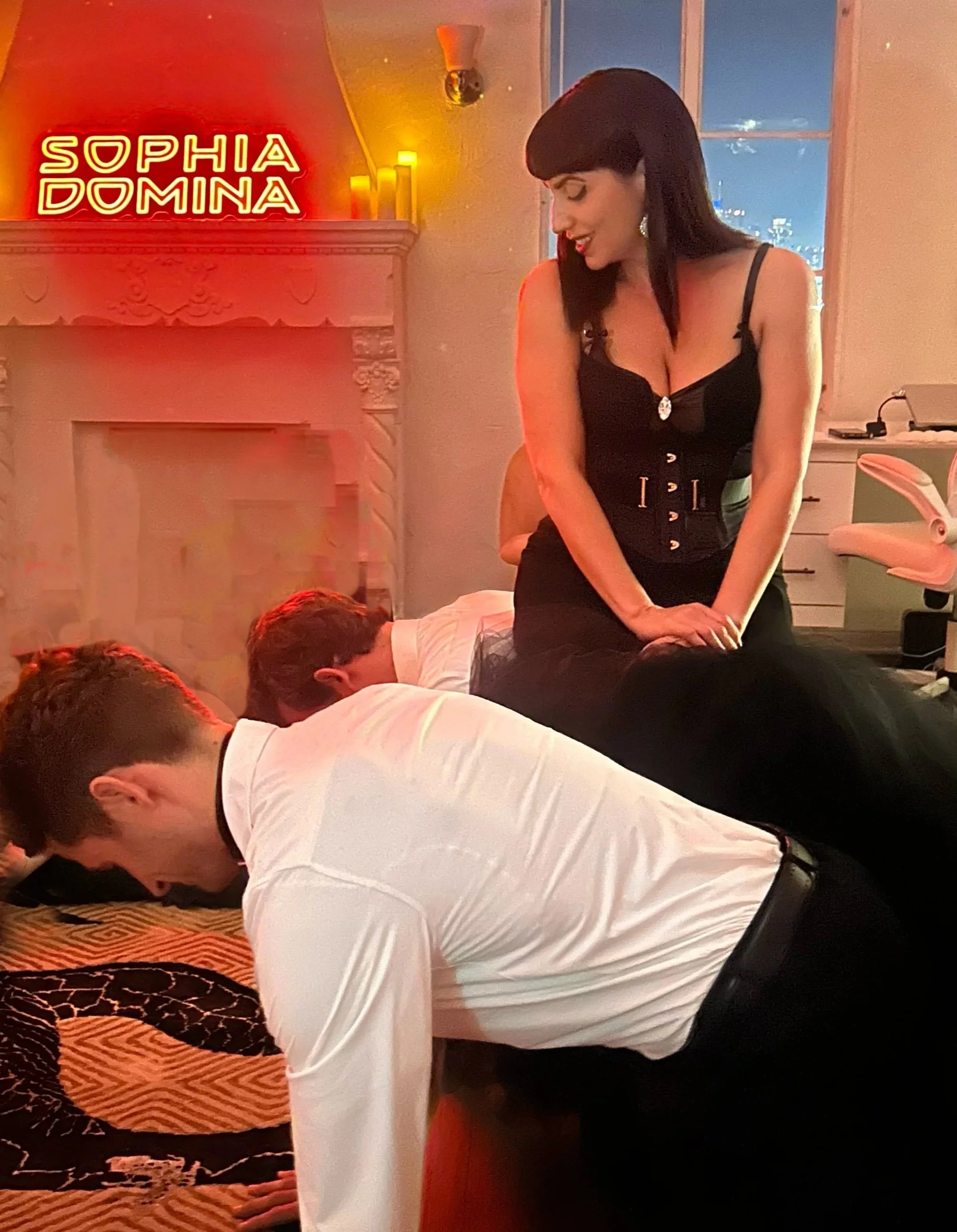
This is where consensual, negotiated play teaches a heavier truth. When objectification is flipped deliberately and with consent, it becomes a mutually fulfilling kink. Many men discover pleasure in object status precisely because they’ve been denied it based on their genitals—socialized to be subjects, initiators, forever responsible.
Being placed. Being quiet. Being decorative for a moment. It turns out this is deeply relaxing for people told their whole lives to “man up.” Pedagogy works better when people are laughing—and still learning.
Objectifying men isn’t the end goal. It’s a mirror. A friendly one.
As women, it’s sometimes easier to objectify a man than to de-objectify ourselves.
This exercise at my parties is intentional. It’s—wait for it—an object lesson.
Reclaiming Subjecthood
Subjecthood is the end goal.
It’s not an identity; it’s a posture. A subject cannot be owned. A subject cannot be safely consumed. A subject rearranges the room simply by arriving—even if a few side tables don’t survive.
To Play but not be played
The call to action is not to be less beautiful.
It is to be less contained.
And yes—there’s an apparent contradiction here. I do sex work, often mislabeled as self-objectification. But that critique usually comes from the same internal watcher Atwood described—the one peering through the keyhole, making sure women are behaving correctly even while naked.
What happens when a woman is not the product, but the producer?
When the gaze is invited, curated, and directed?
When the body is wielded as language, leverage, and choice?
Find out in a future post or read my book now.